
Kool G Rap and His Influence
The influence for those that influenced the world

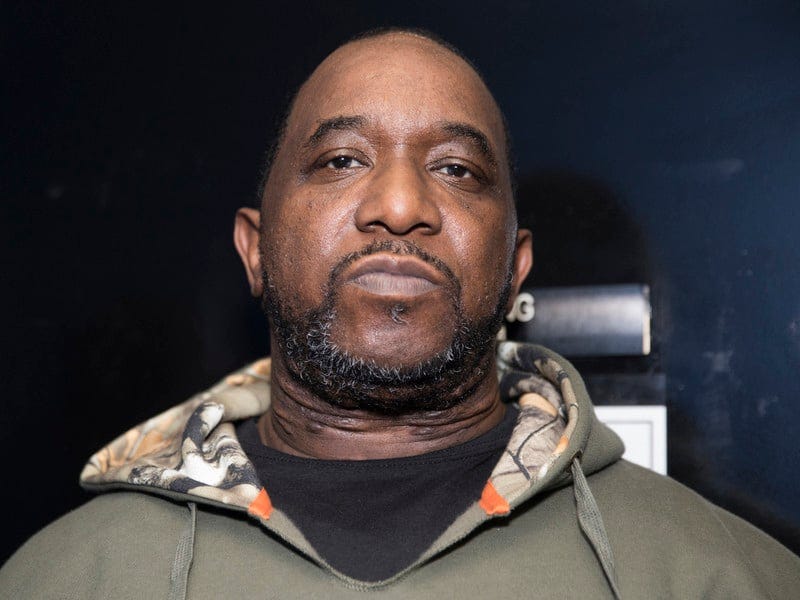
(Photo Credit: WireImage/Monica Morgan)
Kool G Rap is a name revered among hardcore hip-hop circles. Hailing from Queens, New York during the Golden Age (1985~1992) of hip hop, backpackers and old-heads alike know his legacy and his influence. The MC was the originator of a unique style that would go on to be found in every major New York MC that followed him into the Silver Age and beyond (1992-2006).
Astoundingly, as factual as this is, that reputation goes from ubiquitous to nearly unheard of outside the world of hip-hop. Kool G Rap is in a rare territory. On one hand, he’s vitally important to the growth and progress of hip-hop as an art form. While on the other hand, he’s practically unknown beyond the threshold of his own scene. These two contrasting concepts are what puts him in this strange position, he inspired those who then inspired the world.
Kool G Rap’s debut album with DJ Polo is credited with starting something called Mafioso Rap. This was a subgenre that took Gangster Rap ideas but applied an east coast grit and flavor. The themes of Mafioso Rap were themselves those of organized crime, particularly La Cosa Nostra and Latin American cartels. MCs blended their confidence and skills with the smooth bravado and grandiosity affiliated with these crime lords.
Although much of his early albums still had much of the battle rap lyrics signature to the Golden Age of the 80s, the mafioso ideas developed and became fully formed stepping into the 90s. This was best epitomized in the 1990 video for Streets of New York, with Kool G Rap dressed as a La Cosa Nostra wise guy.
By the mid ‘90s, these themes were found everywhere. Hip-hop’s superstars had personas that were all influenced from G Rap’s mafioso archetype. Just looking at nicknames and alter egos makes it plain to see. The duo Capone-N-Noreaga took their names from mobster legend Al Capone and Panamanian dictator-drug trafficker Manuel Noriega. Nas referred to himself as Escobar, the name of the Colombian drug trafficker and head of the Medellin Cartel. Big L was Corleone, a reference to the books and films of The Godfather. The examples go on, and all of this stems from Kool G Rap who owned and perfected this as his modus operandi.
His influence of course goes beyond the mafioso theme. G Rap garnished clout and standing with his lyrical prowess that might have been more powerful than his style. In an era where lyricism was a dominant force, he used his lyrical skill to earn all of the influence he cultivated. With his wordplay, and writing skills, Kool G Rap was legendary. Without his MC skills, his influence wouldn’t have reached as far as it did. He wasn’t just a persona, he backed it up on the wax.
G Rap developed the technique of intra-line rhyming that would become prolific amongst the next generation of MCs. His rhyme schemes were heavily complex and developed compared to the era before him. The amount of rhymes per verse and per line, was unprecedented for his volume of work. This particular skill can be seen most in his greatest influencee, Big Pun.
Thus Kool G Rap is in this rare group. He’s your favorite rapper's favorite rapper. G Rap is the godfather of East Coast gangsta rap, full stop. He’s not as well known as the artists with #1 records (Jay-Z, Nas), in fact he’s only cracked the Billboard 200 twice, but each and every one of those top charting MCs knows exactly who he is.
Remarkably though, Kool G Rap holds no bitterness towards those that surpassed him in terms of income and superstardom. He sees his value to the scene and phenomenon that is hip-hop, and recognized how important that truly is.
“If my whole purpose was to put the battery in the backs of others, maybe this was bigger than me. Maybe it wasn’t about G Rap life propelling to ya know a hundred levels up, maybe it was about spreading it, know what I mean? And giving [others] a chance and an opportunity to change they life, know what I’m saying? For them to get off the block, know what I’m saying? It might have been a purpose bigger than me.”
G Rap isn’t the only one in this category, multiple icons across genres have met similar fates. Detroit rapper Esham was a key inspiration to the horrorcore hip-hop subgenre that saw an underground phenomenon; Budgie was a Welsh hard rock band that was seminal in how 1980s thrash metal sounded. These artists, and more, all have interesting and unique stories. They exist in a liminal space between generations of music but also are legends in their own right. Kool G Rap in particular, seems to exist right beyond the threshold. He’s royally famous amongst those in the know but still nowhere near a household name. Regardless, he’s a legend all the same. He’s the Don, the original, he is Kool G Rap.